AI SEO tools are software that analyze both Google rankings and visibility inside generative engines like ChatGPT, Perplexity, and Gemini, then act on that data to improve content and technical performance.
Want more visibility across search and AI answers without burning hours on spreadsheets? A solid SEO AI tools analysis saves you from buying the wrong stack. This guide breaks down the main tool types, compares seven options worth knowing in 2026, and shows where autonomous agents fit. You get selection criteria, a comparison table, and real use cases.
What are AI tools for SEO analysis?
AI tools for SEO analysis are platforms that use machine learning to interpret search data, generate optimized content, and track how a brand performs across Google and AI engines. Instead of a human auditing pages by hand and squinting at rank reports, the software scans your site, your competitors, and the queries people actually type. Then it recommends or executes changes.
Four broad categories are worth knowing:
- AI content generators - write articles, meta tags, and briefs tuned for target keywords.
- AI search visibility trackers - measure whether ChatGPT, Perplexity, or Google AI Overviews mention your brand. Often called GEO (generative engine optimization).
- All-in-one SEO suites - combine keyword research, audits, rank tracking, and reporting in one dashboard.
- Autonomous SEO agents - the newest category, which understands a goal, builds a multi-step plan, and runs the work on its own.
The last group is different in kind, not just degree. Traditional suites hand you data and leave the labor to you. Agentic systems close the loop. They research, draft, publish, and learn from the results. That shift is why people say AI is revolutionizing SEO rather than just speeding it up.
How does AI enhance SEO strategies?
AI enhances SEO strategies by removing slow, repetitive work and surfacing opportunities a human would miss.
Routine tasks - internal linking suggestions, title optimization, schema checks - are things AI agents can handle on their own, which frees your team for strategy. On the analysis side, AI makes SEO data readable for non-technical people. A dashboard that says "147 keywords worth winning" beats a raw export of 10,000 rows.
The third area is newer and harder to fake. AI search does not give you fixed positions or guarantee traffic the way a blue link does. A mention in a ChatGPT answer has no "rank 3" to measure. That is why a modern SEO AI tools analysis has to cover LLM visibility, not just Google positions.
The practical payoff is cost. Our autonomous SEO tools for small businesses breakdown covers that economics in detail.
Which AI tools are best for SEO in 2026?
The best AI tools for SEO in 2026 depend on one thing: do you want to do the work yourself or hand it off entirely? Below are seven options grouped by what they do - our own platform first, then suites, visibility trackers, and automation layers.
1. Seoapp.ai
Seoapp.ai is our autonomous SEO agent that writes and publishes optimized articles daily while tracking your rankings on Google and your visibility inside ChatGPT, Perplexity, and Gemini. We built it for businesses that want results without running the process by hand.
- Writes and publishes long, optimized articles every day - up to 30 per month on autopilot.
- Auto-publishing to WordPress (Shopify coming soon).
- Tracks real clicks, impressions, and positions by learning from Google Search Console.
- Checks whether ChatGPT, Perplexity, and Gemini cite your brand as a source.
- Scans your site, competitors, and queries, flagging 147+ keyword opportunities.
For whom: companies and founders who want search and AI visibility without time-consuming SEO work. A quick read on Seoapp.ai vs traditional SEO explains where an agent beats the manual stack.
2. All-in-one SEO suites
Large suites like Semrush bundle keyword research, site audits, rank tracking, and reporting. They now add AI visibility features that track brand mentions across AI engines. Strong for teams that want control and have time to act on the data. The downside: the tool gives you findings, not finished work.
3. AI search visibility trackers
This is the fast-growing category built specifically for GEO. Tools here measure Inclusion, Citation, and Share of Voice inside AI answers. The accurate ones scrape real AI responses rather than relying only on API data, since scraped answers reflect what users actually see. Best for brands that already rank on Google and now want to show up in AI responses.
4. AI content generators
These write drafts, outlines, and meta descriptions from a keyword. Useful for scaling a content calendar, but they stop at the draft. You still handle optimization, publishing, and tracking. Good as a writing assistant, weaker as a strategy engine.
How do the leading AI SEO tools compare?
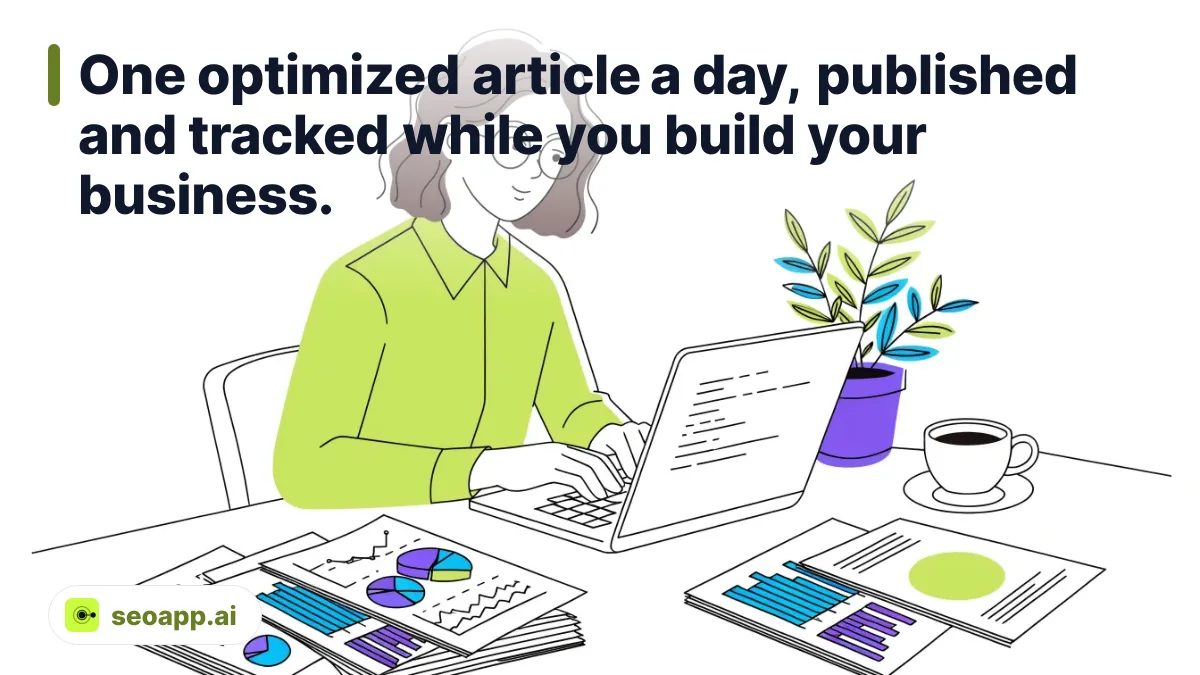
The right choice comes down to two things: how much of the workflow the tool covers, and how hands-on you want to be.
| Tool / Category | Best for | What it covers | Hands-on level |
|---|---|---|---|
| Seoapp.ai | Businesses wanting hands-off results | Research, writing, publishing, Google + AI tracking | Low - runs on autopilot |
| All-in-one suites (e.g. Semrush) | Teams with time to act on data | Keyword research, audits, rank tracking, reporting | High - you do the work |
| AI visibility trackers | Brands focused on GEO | Inclusion, citation, share of voice in AI answers | Medium |
| AI content generators | Scaling drafts fast | Article and meta-tag generation | High - draft only |
The key split is simple. Suites and generators give you tools. Agents give you outcomes. If you have a dedicated SEO person, a suite plus a visibility tracker works well. If you do not - and most small businesses do not - an autonomous agent removes the bottleneck. Our step guide for success shows the decision in practice, and the companion piece on SEO tools for small covers budget-friendly setups.
What does a real autonomous SEO workflow look like?
An autonomous SEO workflow runs the full cycle without you touching each step. It is the clearest example of why agentic AI differs from a basic AI writer. The system understands a goal and builds a multi-step plan toward it.
Here is how the cycle runs:
- Scan. The radar constantly checks keywords, competitors, and AI mentions, building a live picture of where you stand.
- Prioritize. The agent flags the keywords worth winning - often 147+ opportunities - and benchmarks them against competitors.
- Create. Each day the agent adds one complete, ready article to your calendar, written in your customers' language and your brand's tone.
- Publish. The article goes live on WordPress automatically, no copy-paste.
- Learn. As Google Search Console data comes in, rankings rise because the system learns from real clicks, impressions, and positions.
Picture a founder with no marketing team. Instead of hiring an agency or losing evenings to writing, they connect their site once and let the agent publish while they focus on the product. Brand visibility is tracked monthly, so they see the trend without opening a spreadsheet. That is the concrete answer to how a SEO agent works while you sleep.
Frequently asked questions
How does AI enhance SEO strategies?
AI enhances SEO strategies by automating repetitive tasks, simplifying complex data, and adding visibility tracking inside AI answers. It cuts content production time, surfaces keyword opportunities a human might miss, and reduces reliance on expensive agencies. Many businesses report dropping paid ads once an agent handles consistent publishing.
What factors should I consider when choosing AI tools for SEO?
When choosing AI tools for SEO, consider how much of the workflow you want the tool to cover and how hands-on you want to be. Autonomous agents like Seoapp.ai suit businesses that want results without manual work, all-in-one suites fit teams that act on data themselves, and AI visibility trackers help brands focused on generative engine optimization. For most small businesses, an agent removes the biggest bottleneck.
What are the benefits of using AI in SEO?
The main benefits are speed, cost savings, and coverage of both Google and AI search. AI handles routine work, reduces human error, and tracks whether ChatGPT, Perplexity, and Gemini cite your brand. The result is more consistent output and visibility you could not maintain by hand.
A good SEO AI tools analysis is really a decision about how much you want to run yourself. Suites and generators hand you data and drafts. Autonomous agents hand you published articles and tracked results. If you have time and a dedicated person, a suite plus a visibility tracker is a strong setup. If you do not, let an agent close the loop. The simplest next step is to connect your site to Seoapp.ai and watch it add one optimized article a day while it tracks your spot on Google and inside AI answers - then compare that to what a month of manual work would cost.
Rate this article
People don't just Google anymore - they ask AI 🚀
Grab traffic from Google and AI at once. seoapp.ai writes content that ranks and gets cited by AI - so you stay ahead of the competition.
Try seoapp.ai →