Top 10 SEO Tools for 2026: Boost Your Website's Visibility
Ranking on Google used to mean juggling five browser tabs and a spreadsheet. The best tools for SEO optimization in 2026 integrate keyword research, rank tracking, technical audits, content scoring, and AI visibility monitoring into workflows you can actually manage. There are now more than 450 SEO tools on the market. Most people only need a handful. What shifted recently is where visibility actually happens. The list below covers what each tool does well, who it suits, and where it falls short.
Table of Contents
- What are the best platforms for search optimization in 2026?
- 1. Seoapp.ai - autonomous SEO agent for content and AI visibility
- 2. Semrush - the all-in-one research suite
- 3. Ahrefs - backlinks and content gaps
- 4. SE Ranking, Surfer, and Clearscope - rank tracking and content scoring
- 5. Screaming Frog, SEOptimer, Google Search Console, and SEO Site Checkup
- 6. Moz - comprehensive SEO software
- 7. Ubersuggest - budget-friendly SEO tool
- 8. Majestic - specialized in link intelligence
- 9. Yoast SEO - WordPress plugin for on-page optimization
- 10. SpyFu - competitor analysis and keyword research
- How do SEO tools improve website visibility?
- FAQ
What are the best platforms for search optimization in 2026?
The leading options help you find keywords, track rankings, fix technical issues, grade content, and now monitor whether AI engines mention your brand. No single tool does all of it perfectly. That is why most teams combine two or three.
Here is a quick comparison before the detailed breakdown:
| Tool | Best for | Standout feature | Starting price |
|---|---|---|---|
| Seoapp.ai | Automated content + AI visibility | Writes and publishes daily, tracks AI citations | Contact for plans |
| Semrush | All-in-one research | Position tracking + competitor analysis | ~$139.95/mo |
| Ahrefs | Backlink analysis | Deep backlink index, content gap | ~$129/mo |
| SE Ranking | All-in-one on a budget | Local SEO tracking | ~$129/mo |
| Surfer | Content optimization | NLP-driven SERP scoring | ~$79/mo |
| Clearscope | Content grading | Term coverage + readability | ~$129/mo |
| Screaming Frog | Technical crawling | Broken links, meta analysis | Free / $279/yr |
| SEOptimer | Quick audits | White-label client reports | ~$29/mo |
| Google Search Console | Real performance data | Actual clicks and impressions | Free |
| SEO Site Checkup | Tech + AI visibility | Tracks ChatGPT and Gemini mentions | Varies |
1. Seoapp.ai - autonomous SEO agent for content and AI visibility
Seoapp.ai is an autonomous SEO agent that analyzes your Google rankings and your visibility inside AI models, then writes and publishes optimized articles for you every day. It was built to fix the two things that slow businesses down most: the time content takes and the cost of a traditional agency.
Our system scans your site, your competitors, and the queries that matter. Rankings climb as the agent learns straight from Google Search Console data, so you work with real clicks, impressions, and positions instead of estimates.
- Auto-publishing to WordPress, with Shopify coming soon
- Content written in your customers' languages, in your brand's tone
- Monthly brand visibility tracking across search and AI
- Checks whether ChatGPT, Perplexity, and Gemini cite you as a source
For whom: businesses and founders who want more visibility without running SEO by hand. Our guide to the autonomous SEO agent benefits walks through the full workflow.
Visibility in 2026 isn't only about Google - it's about whether AI engines quote your brand when someone asks a question.
2. Semrush - the all-in-one research suite
Semrush is a complete toolkit for keyword research, position tracking, backlink analysis, and competitor research. It is the tool most agencies reach for first, because the data breadth is hard to match. If you want one dashboard covering organic, paid, and content, it fits.
That depth is also its drawback. The interface packs in so many reports that new users often freeze - expect a few weeks before you use even half of what you pay for.
For whom: agencies and mid-size marketing teams that need everything in one place and have the budget. If you want content-focused automation instead, our write-up comparing Seoapp ai vs neuronwriter is worth a read.
3. Ahrefs - backlinks and content gaps
Ahrefs is best known for its backlink index and content gap discovery. If link building and figuring out why competitors outrank you are your priorities, few tools compete on raw backlink data. The site audit and keyword explorer hold up well too.
Ahrefs is popular precisely because the data is reliable. But it rewards people who already know SEO. Casual users struggle to turn its reports into action.
- Deep backlink profiles and referring domain history
- Content gap tool to find keywords competitors rank for
- Site audit for technical issues
For whom: SEO specialists and link builders comfortable reading data. Cost: from about $129/month on the entry tier.
4. SE Ranking, Surfer, and Clearscope - rank tracking and content scoring
These three cover the middle of the workflow: tracking positions and improving individual pages. SE Ranking is an all-in-one suite that leans into local SEO and costs around $129 per month, a reasonable step down from the giants. It suits businesses that want rank tracking and audits without Semrush-level complexity.
Surfer and Clearscope do something narrower but valuable. Both score your draft against top-ranking pages, so you know which terms and topics to add.
- Surfer - real-time, NLP-driven content optimization based on the current SERP, from about $79/month. Great while you write.
- Clearscope - content grading, readability, and thorough term coverage, from about $129/month. Favored by editorial teams.
The catch with content scorers: they optimize for Google's blue links. They won't tell you whether an AI model will cite the page - which is exactly why AI visibility tracking has become its own category.
5. Screaming Frog, SEOptimer, Google Search Console, and SEO Site Checkup
The last four handle technical health and raw performance data. Screaming Frog SEO Spider crawls your whole site to find broken links, duplicate titles, and messy meta tags. The free version covers small sites; the paid license is about $279 per year. It is the technical auditor power users trust.
Google Search Console is free and shows your actual clicks, impressions, and positions straight from Google. It is highly accurate for your own traffic but weak on competitor analysis, so pair it with something else.
That reflects the bigger shift - AI search visitors could pass traditional search visitors by early 2028, so checking whether models reference you is no longer optional.
Technical audits keep your site healthy, but they say nothing about whether an AI answer names you.
6. Moz - comprehensive SEO software
Moz offers a comprehensive suite of SEO tools, including keyword research, link building, site audits, and page optimization insights. Its user-friendly interface and robust data make it a favorite among beginners and seasoned professionals alike.
- Keyword Explorer for discovering new opportunities
- Link Explorer for analyzing backlink profiles
- On-page optimization suggestions
For whom: marketers and SEO professionals looking for a comprehensive toolset with a focus on usability.
7. Ubersuggest - budget-friendly SEO tool
Ubersuggest provides a cost-effective solution for keyword research, site audits, and competitive analysis. It is particularly useful for small businesses and individual marketers who need reliable data without breaking the bank.
- Keyword suggestions and search volume data
- Site audit tool for identifying SEO issues
- Competitor analysis for strategic insights
For whom: small businesses and individual marketers seeking a budget-friendly SEO tool.
8. Majestic - specialized in link intelligence
Majestic is renowned for its focus on link intelligence, offering detailed insights into backlink profiles and link-building opportunities. It is an excellent choice for those who prioritize link-building strategies.
- Trust Flow and Citation Flow metrics
- Backlink history and analysis
- Link-building opportunities
For whom: SEO professionals and link builders focusing on link intelligence and strategy.
9. Yoast SEO - WordPress plugin for on-page optimization
Yoast SEO is a popular WordPress plugin that helps optimize on-page elements for better search engine visibility. It is ideal for bloggers and website owners who want to improve their site's SEO without extensive technical knowledge.
- On-page SEO analysis and suggestions
- Readability checks for content
- XML sitemap generation
For whom: bloggers and website owners using WordPress who need an easy-to-use on-page optimization tool.
10. SpyFu - competitor analysis and keyword research
SpyFu specializes in competitor analysis and keyword research, providing insights into competitors' strategies and identifying profitable keywords. It is a valuable tool for businesses looking to outsmart their competition.
- Competitor keyword analysis
- PPC competitor research
- Keyword ranking history
For whom: businesses and marketers focused on competitive analysis and keyword strategy.
How do SEO tools improve website visibility?
SEO tools improve visibility by turning guesswork into measurable steps: finding the right keywords, fixing what blocks ranking, strengthening content, and tracking results. Each category solves a different piece.
Here is the practical order most teams follow:
- Research - use keyword and competitor data to pick topics you can realistically win.
- Audit - crawl the site to clear technical blockers like broken links and slow pages.
- Optimize - align each page to search intent, entity coverage, and content clustering.
- Track - monitor real positions, clicks, and now AI mentions over time.
- Repeat - feed what works back into the next round of content.
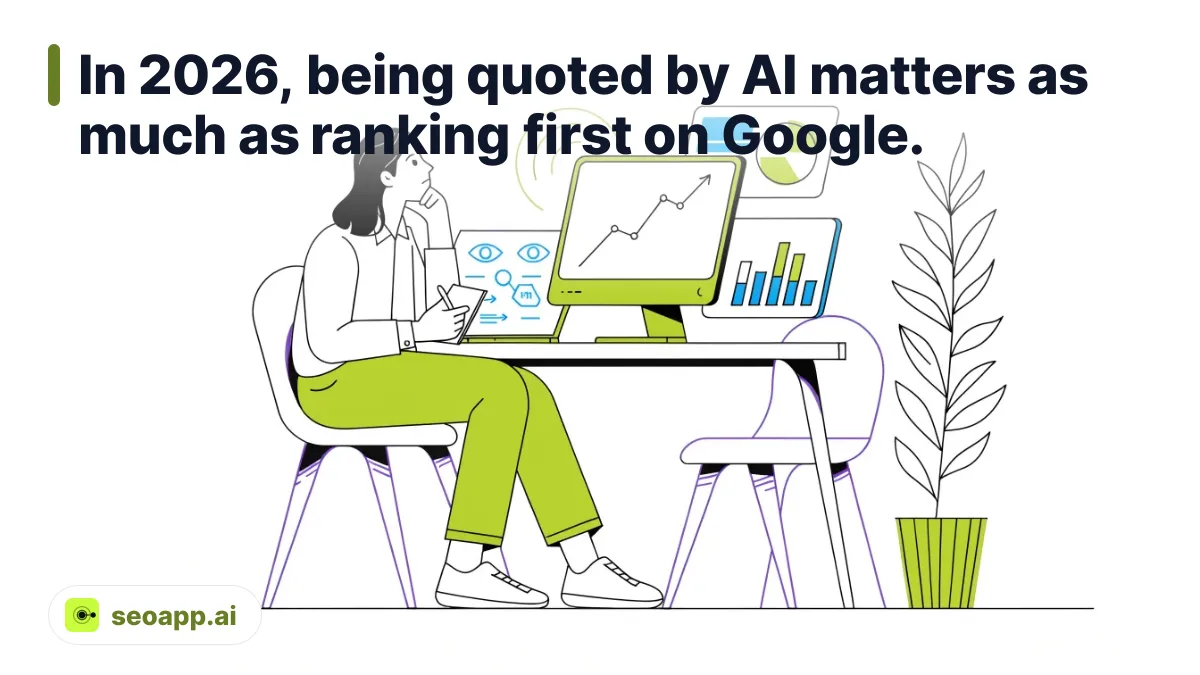
The modern twist is step four. Optimization in 2026 means matching search intent and covering the right entities, not just hitting some keyword density. And because so many searches end without a click, getting quoted inside an AI answer can matter as much as ranking first. Platforms that fold these steps together cut the manual load dramatically - see our breakdown of seo tools for small teams for a leaner setup.
Frequently asked questions
How do SEO tools improve website visibility?
They identify profitable keywords, flag technical errors, grade content against top-ranking pages, and track your real positions over time. Newer tools also check whether AI engines like ChatGPT and Gemini cite your brand, which matters now that most searches end without a click.
Which SEO tool is most user-friendly?
Google Search Console is the easiest free starting point, and SEOptimer is quick for straightforward audits. For hands-off content work, Seoapp.ai removes the learning curve entirely by writing and publishing optimized articles automatically, so you do not need to master a complex dashboard.
Are there free tools for SEO optimization?
Yes. Google Search Console is free and gives accurate data on your clicks, impressions, and positions. Screaming Frog offers a free version for small-site crawls, and several AI SEO checkers have free tiers for basic audits before you commit to a paid plan.
If you only remember one thing: the tool stack that wins in 2026 covers both Google rankings and AI citations, not just one of them. Pick a free option like Google Search Console to see where you stand, add a content and crawling tool, and layer in AI visibility tracking before your competitors do. If running all of that by hand sounds like a second job, that is the exact problem we built Seoapp.ai to solve - it writes, optimizes, and publishes for you while watching your rankings and AI mentions daily. Start by checking how visible your brand already is inside ChatGPT and Perplexity; the gap is usually bigger than people expect.
Rate this article
People don't just Google anymore - they ask AI 🚀
Grab traffic from Google and AI at once. seoapp.ai writes content that ranks and gets cited by AI - so you stay ahead of the competition.
Try seoapp.ai →