Most SEO advice still treats content like a checklist: keyword in the title, keyword in the H1, done. That worked in 2015. Today, SEO content optimization is the practice of refining a page's text, structure, and HTML so both search engines and AI systems can understand, trust, and cite it. The goal has shifted from stuffing keywords to matching search intent and proving genuine value.
If you run a business and want more organic traffic without spending your week on keyword research and rewrites, this guide compares the tools and approaches that actually move rankings in 2026 - including autonomous agents like our own Seoapp.ai, which analyzes Google rankings and AI visibility, then publishes optimized articles daily. Below you'll find concrete options, what each does well, and how to pick one.
What SEO content optimization actually means in 2026
SEO content optimization is the process of improving a web page so search engines like Google can crawl and rank it, while readers get a clear, useful answer. It balances human readability with algorithmic relevance to drive organic traffic. That definition hasn't changed much - but the weight behind each factor has.
Keyword density used to dominate. Now Google's systems reward user experience, content quality, and freshness. Google's freshness systems even prioritize newer content for queries that need current information, so an article updated in 2026 with new data often outranks a stale one from years back.
Three pillars carry most of the work today:
- Search intent - understanding whether the user wants information, a comparison, or a purchase before you write a single line.
- Structure - logical H2 and H3 subheadings, short paragraphs, and bullet points that both crawlers and skimmers can parse.
- Technical health - mobile responsiveness, page speed, descriptive URLs, and clean site structure so indexing runs smoothly.
Google's own SEO Starter Guide emphasizes making your site easier for search engines to understand and for users to find.
Why AI agents changed the traffic equation
Traditional content optimization tools tell you what to fix. You still do the work. An AI SEO agent does the analysis and the writing, then keeps monitoring results. That's the gap most businesses feel: they know their content needs updating, but nobody has the hours.
An AI SEO agent is software that autonomously researches keywords, drafts optimized articles, and tracks visibility across both Google search and large language models. Instead of a one-time audit, you get a continuous loop.
There's a second reason AI agents matter now: zero-click answers.
The tools worth comparing
Here's how the main options stack up. We've put our own agent first because it's built for the specific gap this article is about - visibility in both Google and AI, on autopilot.
| Tool | Best for | Key edge | Model |
|---|---|---|---|
| Seoapp.ai | Hands-off traffic growth | Publishes daily, tracks Google + AI visibility | Autonomous agent |
| Surfer SEO | In-house writers | Real-time on-page scoring | NLP optimizer |
| Semrush | Full SEO teams | Keyword research depth | Suite |
| Ahrefs | Link and keyword analysis | Backlink database | Suite |
| ChatGPT | Drafting help | Fast content ideas | Assistant |
1. Seoapp.ai - autonomous SEO and AI visibility agent
Our platform analyzes your Google rankings and your presence in ChatGPT, Perplexity, and Gemini, then produces optimized articles without you touching a keyword tool.
- Daily optimized content aligned to real search intent
- Tracks visibility in both classic search and AI answers
- Built-in structure for descriptive URLs, internal links, and freshness
For whom: businesses that want organic and AI traffic without running SEO manually. See how our approach compares in Seoapp ai vs surfer and our take on autopilot vs nlp optimizer workflows.
2. Surfer SEO - real-time content scoring
Surfer gives you a live score as you write, comparing your draft against top-ranking pages for term coverage and structure.
- Content editor with keyword suggestions
- SERP analysis for word count and headings
For whom: teams with writers who want guidance but keep control of every draft.
3. Semrush and Ahrefs - the classic suites
Both are strong for keyword strategy, long-tail keywords, and technical optimization audits. Semrush leans into keyword research; Ahrefs' Keywords Explorer helps identify terms with high traffic potential. Neither writes or publishes for you - they hand you the map, not the finished road.
How each option handles the core optimization tasks
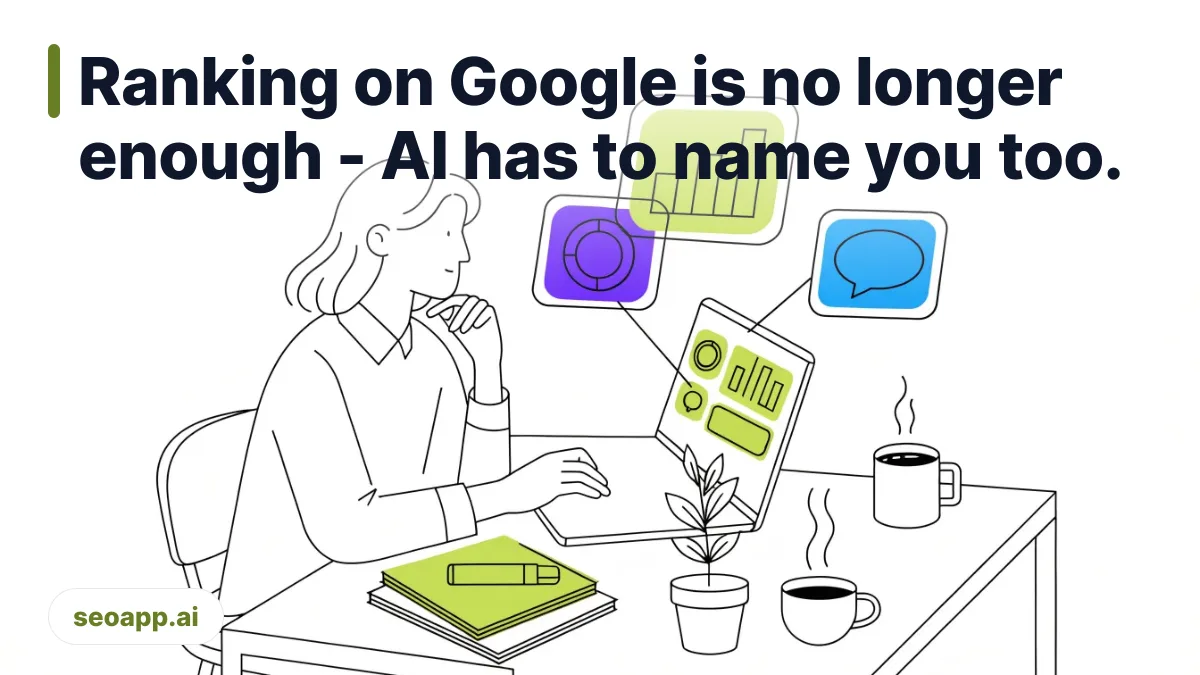
Not every tool covers the whole workflow. Knowing where each stops saves you from buying three subscriptions to do one job.
Keyword strategy is where the suites shine. Modern keyword research considers search intent and long-tail keywords, since those convert better than broad head terms. Semrush and Ahrefs excel here. Our agent handles this in the background, so you never open a keyword report.
On-page work - title tags of 50 to 60 characters, meta descriptions around 155 to 160, and clean H2 structure - is standard across Surfer and the suites. The difference is who executes it. A writer applies Surfer's recommendations by hand; our agent bakes them into every published draft.
Then there's the part most tools ignore: AI citation. Getting quoted by an LLM needs atomic definitions and self-contained answers, not just keyword coverage. We deep-dive this in our guide on agent ai llm content and its multilingual sibling llm content ko. Traditional optimizers weren't designed for this layer yet.
How to choose the right approach for your business
Start with one honest question: do you have someone to run SEO every week? If yes, Surfer plus a suite works well. If no, an autonomous agent removes the bottleneck.
A practical way to decide:
- Define your goal - more leads, more sales, or brand visibility in AI answers.
- Count your available hours per week for content. Under three? Lean autonomous.
- Check whether you need AI visibility, not just Google rankings.
- Pick tools that avoid duplicate content and enforce descriptive URLs by default.
- Commit to a publishing rhythm - consistency beats one big content push.
One trap to skip: keyword stuffing still hurts rankings, and no tool fixes bad intent matching. If your article answers the wrong question well, it won't rank. Search intent decides the type, format, and angle of content long before word choice matters. Get that right, and content optimization enhances visibility, rankings, traffic, leads, and sales in a fairly predictable chain.
Frequently asked questions
How do I learn SEO as a beginner?
Start with Google's SEO Starter Guide, which covers crawling, indexing, and on-page basics in plain language. Then practice on one real page: match search intent, write a clear title tag, and add internal links. Free tools like Google's People Also Ask show you what readers actually ask, which is the fastest way to learn intent.
What is the 80/20 rule in SEO?
The 80/20 rule in SEO suggests that 80% of your results come from 20% of your efforts. Focus on the most impactful tasks, such as optimizing high-traffic pages and improving user experience, to maximize your SEO outcomes.
What are the 3 C's of SEO?
The 3 C's are content, code, and credibility. Content covers relevance and search intent; code covers technical optimization like site structure, page speed, and indexing; credibility covers authority signals such as links and trust. Balancing all three is what modern SEO content optimization aims for.
Can ChatGPT do SEO?
ChatGPT can help draft, brainstorm, and outline content, but it doesn't research live rankings, track your visibility, or publish on a schedule. It's a writing assistant, not an SEO strategy. Autonomous agents like ours combine drafting with live ranking analysis and continuous publishing, which is the part ChatGPT alone can't handle.
The short version: SEO content optimization in 2026 is less about tricking algorithms and more about answering intent clearly, keeping content fresh, and being structured enough to get cited by AI. Pick the tool that fits your hours, not just your budget. If your week has no room for keyword reports and rewrites, start a trial with us at Seoapp.ai and let the agent handle the daily grind while you watch the traffic - and the AI citations - build.
Rate this article
People don't just Google anymore - they ask AI 🚀
Grab traffic from Google and AI at once. seoapp.ai writes content that ranks and gets cited by AI - so you stay ahead of the competition.
Try seoapp.ai →